
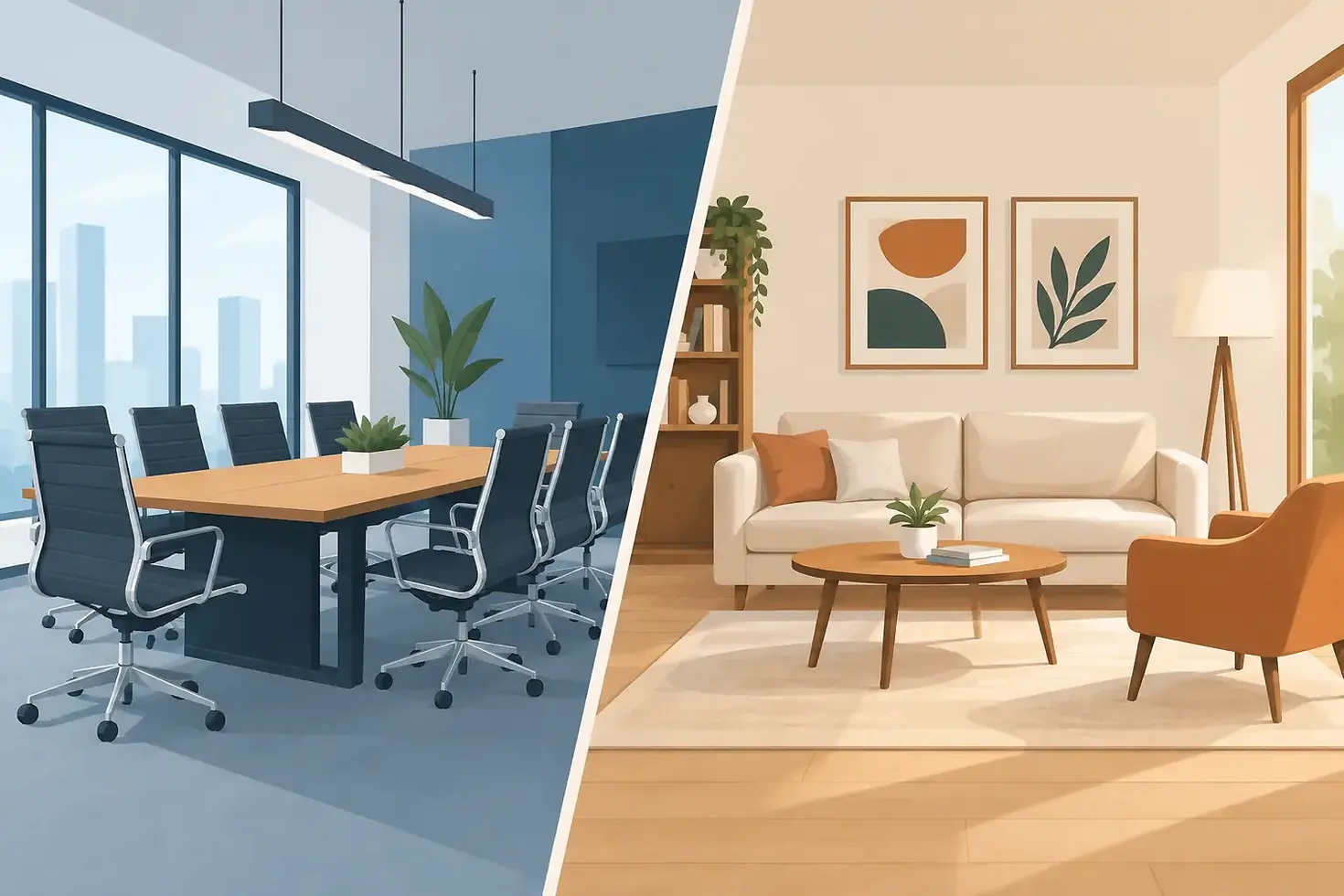
Contract Furniture vs Residential Furniture
A guest room lounge chair may look perfectly at home in a residential setting, yet fail quickly when it is placed in a busy hotel room. The difference is not always visible in a rendering or showroom sample. In contract furniture vs residential furniture, the decisive factors are the ones behind the finish: engineering, material selection, compliance, repeatability, and the ability to perform under constant use.
For hospitality developers, designers, and procurement teams, this distinction affects far more than initial price. It shapes guest experience, maintenance planning, project schedules, warranty exposure, and the long-term value of the investment.
Contract Furniture vs Residential Furniture: The Core Difference
Residential furniture is generally designed for private homes, where use is personal, variable, and comparatively limited. A dining chair may serve one household for years. A sofa may receive regular use but is rarely subjected to luggage impact, frequent cleaning, guest turnover, or the expectations of a national hotel brand.
Contract furniture is built for commercial environments such as hotels, resorts, restaurants, offices, multifamily common areas, and senior living properties. It must withstand repeated use by many people with different habits, weights, and expectations. In hospitality, a piece also needs to maintain its appearance after housekeeping cycles, guest traffic, and daily operational demands.
This does not mean every contract piece is visibly heavier or less refined. High-end contract furniture can be highly tailored, with custom profiles, premium veneers, detailed upholstery, and distinctive finishes. The difference is that those design decisions are supported by construction and materials appropriate for the intended environment.
Durability Is Designed Into the Construction
A contract-grade item is not simply a residential piece made with thicker foam or a tougher fabric. Durability is considered across the entire build.
For upholstered seating, that can include a reinforced hardwood or metal frame, commercial-grade suspension, higher-density foam, durable decking, and upholstery selected for abrasion resistance, cleanability, and seam performance. A hotel sofa also requires careful attention to the points that receive the most stress: arm connections, seat edges, back framing, legs, and corner joints.
For wood case goods, contract construction may involve engineered substrates suited to the application, durable edgebanding, reinforced drawer systems, secure hardware, and finish systems selected to resist scratches, moisture, cleaning products, and UV exposure. A guest room desk or vanity is routinely exposed to luggage, electronics, beverages, cosmetics, and frequent cleaning. The specified material package should reflect that reality.
Residential furniture can also be exceptionally well made, particularly in the luxury market. However, it may be engineered around a different pattern of use. A hand-applied finish that is appropriate for a private residence may not be the practical choice for 250 guest rooms. The right decision depends on the property's operating conditions, not simply whether the design reads as luxury.
Performance testing matters
Commercial projects often require performance standards that residential products are not designed or documented to meet. Upholstered furniture may need to satisfy flammability requirements, while seating can be evaluated for strength, stability, and cyclic loading. Fabrics may be reviewed for abrasion, colorfastness, pilling, stain resistance, and cleanability.
Requirements vary by jurisdiction, project type, and brand standard. A manufacturer should be able to identify the applicable criteria early, coordinate test documentation where required, and make sure that the approved construction matches the tested or specified product. Leaving these questions until production can lead to substitutions, delayed approvals, or unnecessary redesign.
Compliance Is a Project Requirement, Not an Afterthought
Commercial interiors operate within a framework of codes, brand standards, accessibility considerations, and owner requirements. Furniture must support that framework.
For hospitality projects, this may include fire-retardancy requirements for upholstered components, appropriate labeling, material documentation, and finish selections compatible with the specified environment. Public-area furniture may also require special consideration for egress, accessibility, stability, and cleanability. In some cases, the relevant standard is dictated by the hotel flag, insurer, local authority, or design specification rather than by a single universal rule.
Residential furniture is often sold as a finished consumer product, with limited adaptation beyond fabric or finish options. Contract furniture is more commonly developed through a specification process. That process allows the designer's intent to be reviewed alongside performance, code, budget, lead time, and installation needs.
The value of this coordination is practical. A beautiful chair that cannot be documented for the project, shipped efficiently, or maintained by operations is not a successful hospitality solution.
Customization Works Differently in Contract Projects
Residential buyers often choose from established collections, standard sizes, and a focused group of finish options. Contract buyers may need furniture developed around a specific floor plan, brand prototype, material palette, or operational need.
A custom headboard may need to align with integrated lighting and wall protection. A banquette may need precise dimensions to meet circulation requirements. A conference table may require concealed power, data access, cable management, and sectional shipping for elevator access. Guest room case goods may need to coordinate with television mounting, minibar clearances, ADA considerations, and field conditions.
This is where shop drawings and production coordination become central. Dimensions, reveals, hardware locations, material transitions, upholstery details, and mounting methods need to be resolved before manufacturing begins. A detailed approval process reduces field surprises and protects the design intent as a project moves from concept to installation.
Customization does not always mean starting from zero. It can mean adapting a proven construction platform to suit a new finish, size, upholstery package, or hotel prototype. That approach can preserve character while improving cost control and consistency across rooms or properties.
Initial Cost Is Only One Part of Value
Residential furniture can appear less expensive at the point of purchase. For a small, lightly used space, that may be a sensible choice. A boutique office lounge, model unit, or private club area may not need the same level of construction as a high-occupancy hotel lobby.
For a hospitality environment, the more useful comparison is lifecycle value. Consider replacement frequency, repairability, housekeeping demands, warranty coverage, freight efficiency, installation coordination, and the cost of taking a room or public space out of service. A lower initial price can lose its advantage quickly if finishes wear prematurely, hardware fails, or matching replacements are unavailable.
Contract furniture is often specified with serviceability in mind. Replaceable glides, accessible hardware, repairable upholstery components, and repeatable finish formulas can help an owner maintain the asset over time. For multi-property groups, consistent sourcing also supports future renovations and phased rollouts.
That said, contract furniture is not automatically the correct answer for every item. Decorative accessories, low-contact accent pieces, and certain specialty elements may be sourced differently when they do not carry meaningful operational risk. The key is to make intentional category-by-category decisions rather than applying one standard to an entire project.
Scale and Consistency Change the Manufacturing Equation
A single custom residential sofa can be assessed as an individual object. A contract order may involve dozens or hundreds of related pieces, each requiring consistent dimensions, finish tone, upholstery application, and packaging.
This is why production planning matters. Material lead times, finish control samples, first-article approvals, quality checks, packing methods, and delivery sequencing all affect the final result. A manufacturer needs systems that can translate an approved prototype into repeatable production without losing the detail that made the original piece distinctive.
For projects with varied scopes, a combined manufacturing strategy can also be valuable. North American production may be the right fit for highly custom pieces, compressed timelines, or close coordination. Overseas manufacturing can provide scalable capacity for larger production runs when planning and quality control are managed carefully. The best path depends on quantity, complexity, schedule, logistics, and the project's tolerance for changes after approval.
Luxedge approaches these decisions as a production partnership, coordinating custom engineering and manufacturing options around the needs of the specific project rather than forcing a design into a fixed catalog format.
How to Specify the Right Furniture for the Space
The most effective specifications begin with how the furniture will actually be used. A lobby lounge chair, guest room desk, restaurant banquette, and executive suite sofa may all have different performance demands, even when they share a visual language.
Start by defining occupancy, expected traffic, cleaning protocols, environmental exposure, brand requirements, and replacement expectations. Then review the construction, finishes, upholstery, testing needs, dimensions, and installation conditions with the manufacturer. Early alignment is particularly valuable for custom pieces with integrated electrical components, wall mounting, stone, metal, or multiple material transitions.
A thoughtful contract specification protects the visual concept while giving the operations team furniture that can hold up to the work it needs to do. Before approving the next finish sample or final rendering, ask a direct question: will this piece still represent the property well after thousands of guest interactions? That is where the right manufacturing partner earns its place in the project.



Comments